Old liquid line output tripled in five months, building the buffer to install a new line
35k → 110kunits a week
1,000 → 0–1leaking bottles a week
Read the full story
The challenge
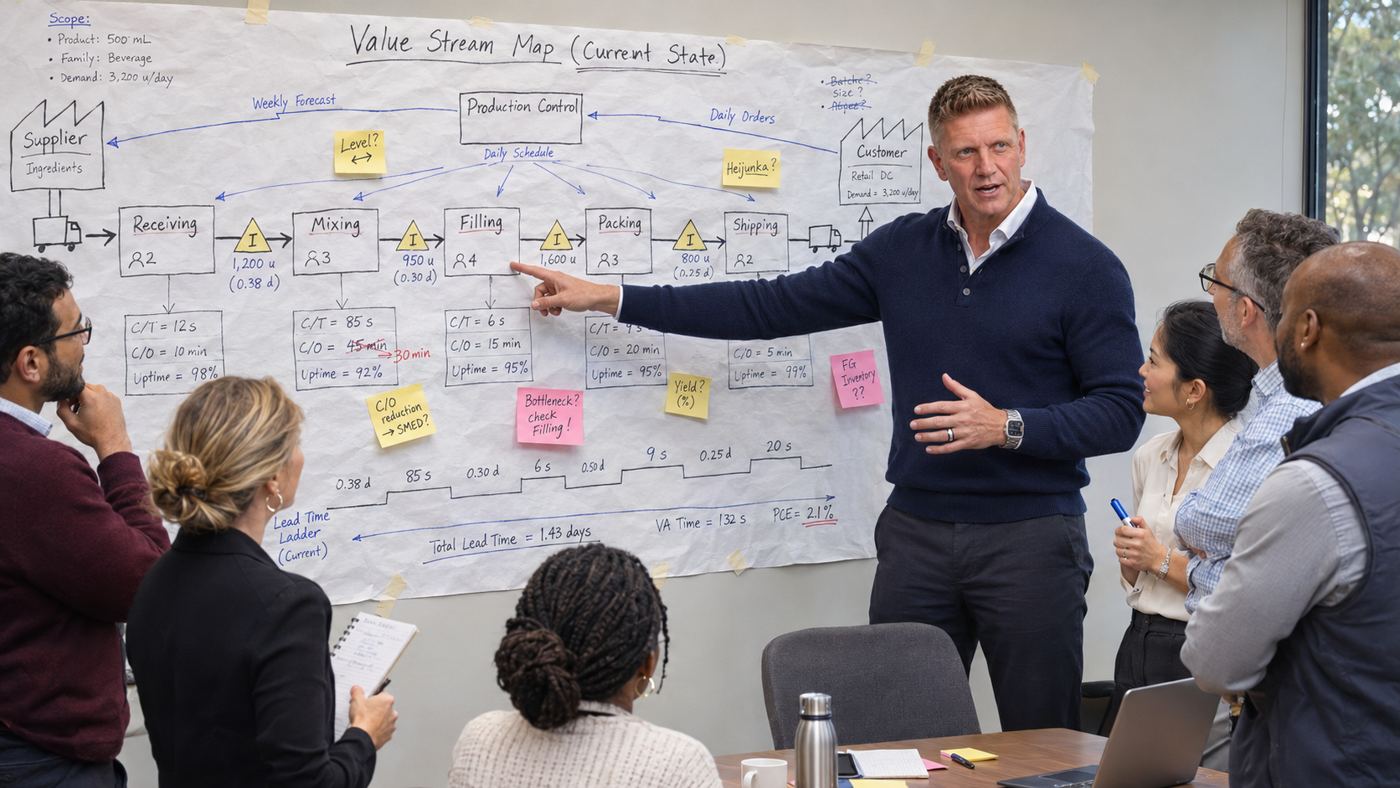
Orders were 40,000 to 50,000 units a week, but the old line made only 30,000 to 35,000. A new line had been bought, but installing it meant eight weeks of downtime, and there was no stock to cover it. Everyone said: don't worry, we're getting a new line.
What we did
- Involve
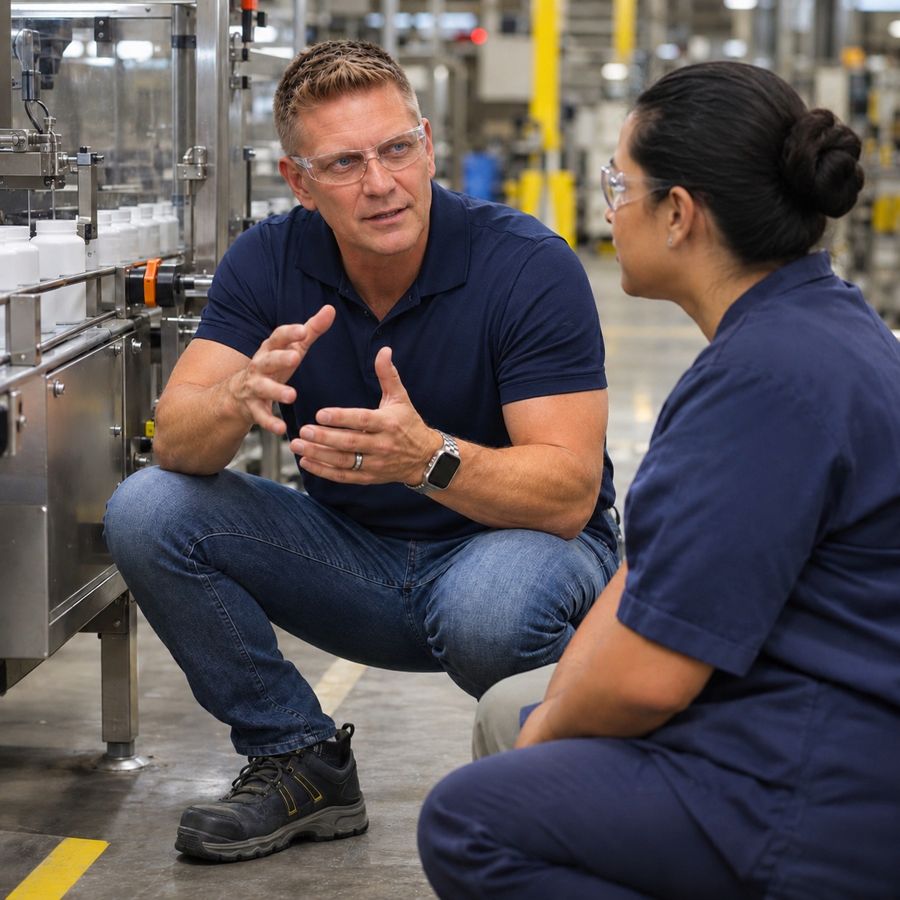
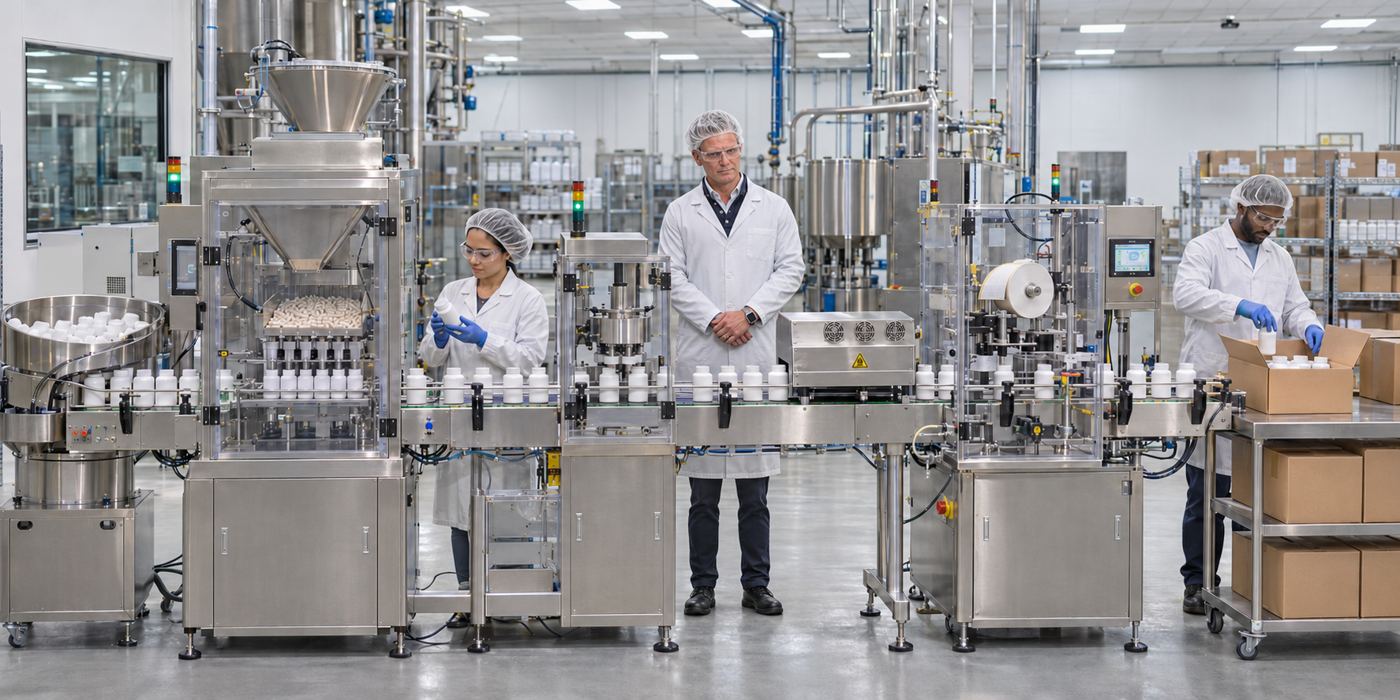
- Johan worked on the line and produced alongside the operators to learn what was really going on.
- Engage
- Eight of nine machines were leveled and aligned. Seven of nine steam-tunnel settings were locked and everyone trained on the other two. Capper set-up was fixed to stop leaks. Bottles that used to be cooled for days and run through the line twice were re-shrunk in a separate steam tunnel instead. Labels were switched from flexo to digital after showing that flexo's real cost, with scrap and rework, was about $0.40 against $0.20.
- Empower
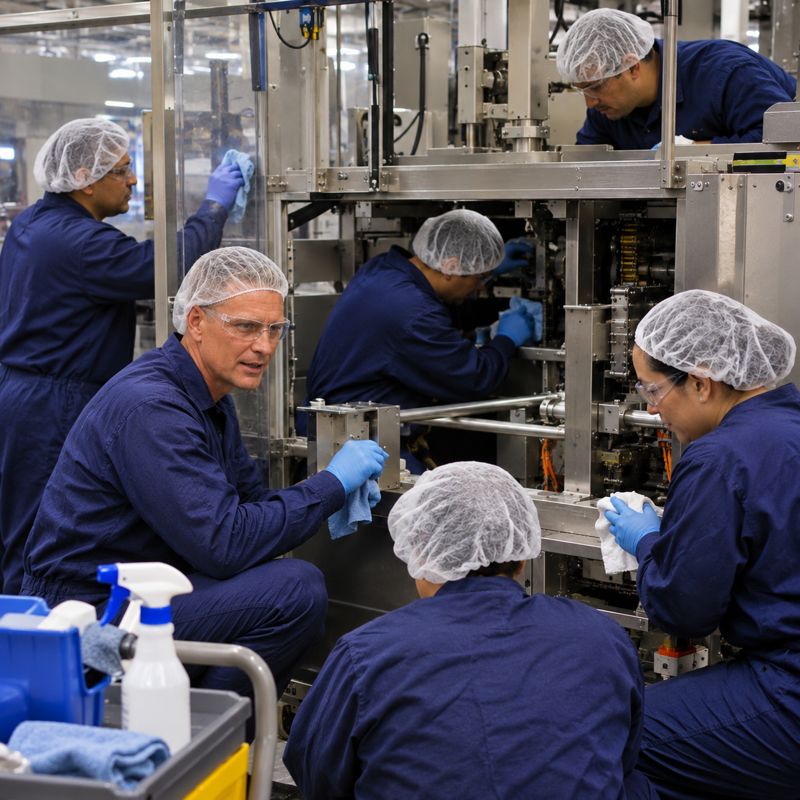
- CILT (Clean, Inspect, Lubricate, Tighten) with one-point lessons, and weekly hands-on training with the engineers, carried over to the new line.
The results
| Measure | Before | After |
|---|---|---|
| Weekly output | 30,000–35,000 | 110,000 |
| Leaking bottles | Over 1,000 a week | 0–1 a week |
| Bottles returned for re-labelling | About 30% | 0 |
| Real cost per label | About $0.40 | $0.20 |
The data proved the old line could deliver, but nothing moved until people stopped waiting for the new line and started owning the one they had.